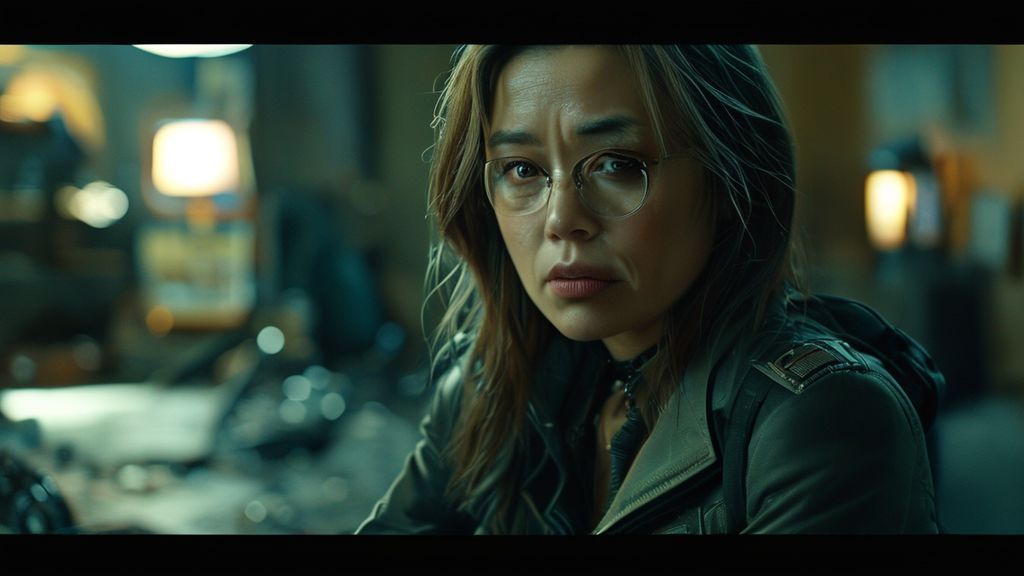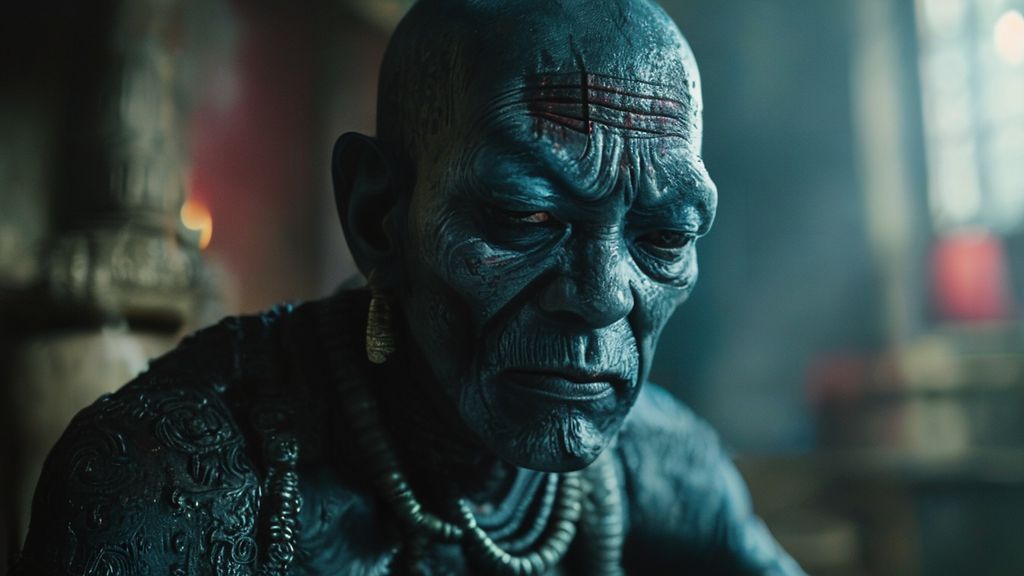
If Mae Nak is the ghost of love, the Phi Krasue is the ghost of filth and visceral taboo. Known in Malaysia as Penanggalan and in Cambodia as Ap, this creature is arguably one of the most grotesque manifestations in world folklore. By day, the Krasue appears as a normal woman, often young and beautiful, living in the village. But her behavior is strange; she avoids eye contact, seems perpetually exhausted, and obsessively cleans her mouth.
The transformation occurs at night. While her body sleeps, her head detaches from her neck, dragging with it a tangle of internal organs: the heart, stomach, and intestines, which hang beneath it. This visceral mass floats in the air, emitting a luminous glow (red or green) like a will-o'-the-wisp. The Krasue roams through fields and villages with an insatiable hunger. It doesn't seek fresh human flesh like a zombie; it craves blood, feces, carrion, or placentas. Its preferred prey are pregnant women or those who have just given birth. The creature uses a long, tubular tongue to suck blood and fluids from the womb.
To protect themselves, Southeast Asian villagers traditionally surrounded their homes with thorny branches. The logic is brutally simple: if the Krasue attempts to enter, its dangling intestines will get caught on the thorns, causing excruciating pain or trapping it until sunrise, which would kill it. The Krasue's curse is believed to be transmitted through saliva (by sharing food or drink) and is often associated with women who practiced failed black magic or committed grave sins. Anthropologically, the myth reinforces strict hygiene norms and taboos surrounding bodily fluids, transforming disease and filth into a literal monster that glows in the dark.