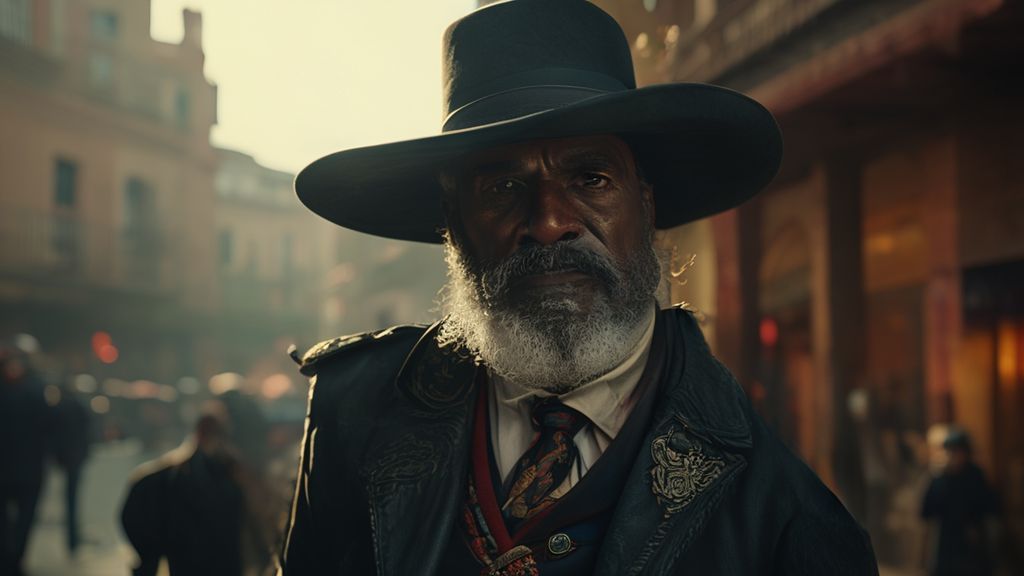
On the dusty roads of rural Mexico, beneath the silver moonlight, rides a figure embodying both elegance and terror: The Charro Negro. He is not a tattered specter nor a deformed monster; he is the very image of virility and power, yet corrupted by darkness. He is described as a tall, slender man, dressed in the most luxurious charro suit imaginable. His suit is jet black, with silver or gold buttons and details that shine with an eerie, inherent light. He wears a wide-brimmed hat that conceals his eyes, and rides an enormous horse, as black as its owner, whose eyes glow with flames or burning embers.
The legend of the Charro Negro is a Mexican Faustian tale. It is said that in life, he was a man of humble origins but consumed by ambition. He loved luxury, fine clothing, and the admiration of others, but his poverty prevented him from achieving his dreams. In his desperation, he invoked the Devil. Lucifer, drawn by the young man's vanity, appeared and offered him inexhaustible riches in exchange for his soul. The young man accepted without hesitation. He lived years of opulence, women, gambling, and power. He spent fortunes on suits, horses, and parties, becoming the most envied charro in the region.
But as in all demonic pacts, the time came due. When death arrived to collect its debt, the charro, terrified, tried to flee. He mounted his best horse and rode desperately, attempting to hide in a church or on sacred ground. But the Devil does not forgive. He intercepted him on the road and cursed him: he would not die, but instead become the collector for Hell. He was condemned to wander the roads eternally, suffering the solitude and the thirst for wealth he could no longer enjoy, with the task of tempting other greedy individuals to take his place and thus, perhaps someday, earn his rest.
The Charro Negro appears to solitary travelers. His behavior is deceptively courteous. He approaches the wanderer and strikes up a conversation with a deep, seductive voice. Sometimes he offers a ride on his horse, or displays a bag full of gold coins, offering help. If the traveler is greedy and accepts the coins, they seal their own pact and are condemned. If they agree to mount the horse, they discover with horror that they cannot dismount; the beast grows in size and launches into an infernal race towards the abyss, taking the unfortunate passenger forever.
However, the Charro Negro respects those who are not tempted. If the traveler politely refuses his offers, maintains their faith, and shows no fear, the Charro accompanies them until dawn or to the gates of their town, protecting them from other dangers of the night, then courteously bids farewell and vanishes. He is an entity of twisted justice: he only takes those who, out of their own greed or weakness, choose to go with him.
This legend reflects the cultural tension surrounding wealth and status in Mexican society. The charro suit, a national symbol of pride, becomes a cursed garment here when obtained through illicit or immoral means. The Charro Negro reminds us that appearance and money do not save the soul, and that some debts are paid beyond death. On lonely roads, when one hears the gallop of a horse and the jingle of silver spurs where no one should be, the wise lower their gaze and keep walking without stopping, knowing that the Devil is on his rounds, looking for someone willing to sell their eternity for a handful of pesos.