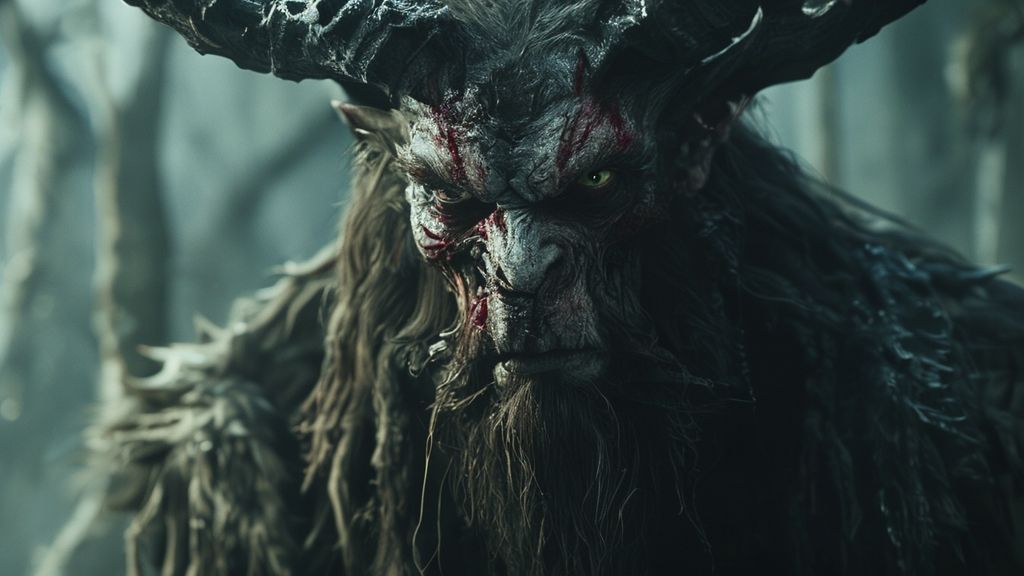
In the frozen forests of northern Canada and the Great Lakes region, the Algonquian peoples whisper the name of the Wendigo with fear. It is not simply a monster; it is the embodiment of insatiable hunger, the desperation of winter, and the breaking of the ultimate taboo: cannibalism. The Wendigo was once a human being—a hunter or traveler who, trapped by the brutal winter and starvation, committed the unforgivable act of eating human flesh to survive. In doing so, they invited the spirit of the Wendigo to enter them, transforming into a cursed beast.
The description of the Wendigo is one of the most horrifying in global folklore. It is depicted as a skeletal giant, with skin stretched taut over its bones, the ash-grey color of death. Its eyes are sunken deep into their sockets, its lips are torn or eaten away, revealing sharp, yellowish teeth. It emits an odor of decay and decomposition. But most symbolically, its heart is made of pure ice. The Wendigo is never satisfied; the more it eats, the larger it grows, yet it remains perpetually famished. It is eternal, painful gluttony.
This creature is a perfect hunter in winter, capable of mimicking human voices and moving with the speed of the wind. Psychiatrically, the term 'Wendigo Psychosis' was used by anthropologists to describe a condition where members of isolated tribes developed a paranoid fear of becoming cannibals or an uncontrollable craving for human flesh. The legend of the Wendigo served as a potent social law in extreme conditions: it warned that losing one's humanity and resorting to cannibalism was a fate worse than death itself. The Wendigo is not merely a physical predator; it is a reminder of the fragility of human civilization against the ferocity of nature and hunger.