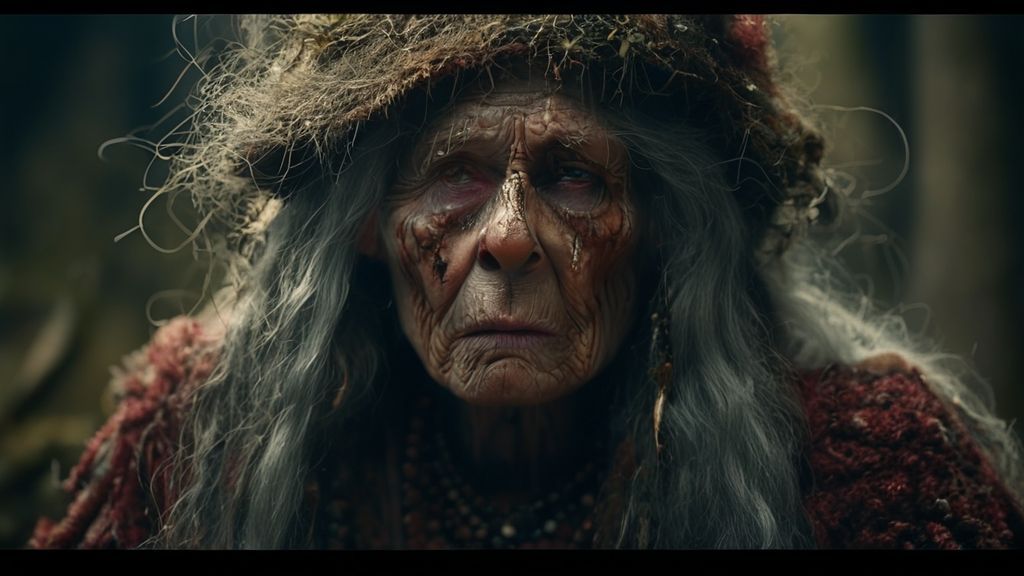
Deep within Russia's birch forests, where winter seems eternal, lives the most iconic and complex figure of Slavic folklore: Baba Yaga. To simply call her a 'witch' is an insult to her power. She is a force of nature, the guardian of the threshold between life and death. Her abode is not a gingerbread house, but a living hut ('izba') that stands on giant chicken legs, allowing the house to rotate and move through the forest.
The fence surrounding her dwelling is made of real human bones, and the skulls on the posts have eyes that shine at night, illuminating the clearing. Baba Yaga is a bony old woman ('Baba Yaga Pata de Hueso'), with a nose so long it touches the ceiling when she sleeps. She doesn't fly on a broom, but inside a giant mortar (a grinding bowl), propelling herself with the mortar's pestle and erasing her tracks with a silver birch broom.
What's fascinating about Baba Yaga is her moral ambiguity. Sometimes she's a cannibal villain threatening to cook children (as in the tale of Vasilisa the Beautiful), but other times she's a magical and wise donor. If the hero is brave, polite, and pure of heart, she may help, offering advice or powerful artifacts. But if they're rude or weak, they'll end up as her dinner. Baba Yaga represents the wild and unpredictable chaos of Russian nature. She's neither good nor evil; she's dangerous. Encountering her is a definitive test of character. She ages a year every time she's asked a question, and rejuvenates when drinking blue rose tea, symbolizing the eternal cycle of life, death, and rebirth.