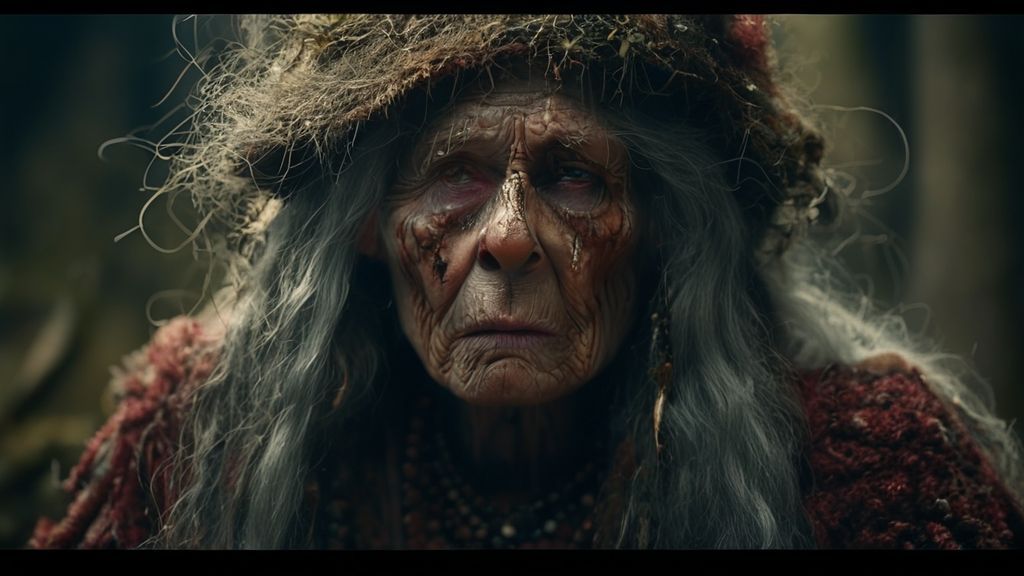
Before the arrival of Christianity, ancient Slavs worshipped their ancestors. When the religion changed, those ancestors did not disappear; they transformed into the Domovoi, the spirit of the home. Each traditional Russian house has a Domovoi. It is not an intrusive ghost, but the true owner of the house ('Dom' means house), the invisible grandfather who lives behind the stove, in the attic, or under the threshold.
The Domovoi is imagined as a small, elderly man covered in soft hair (even on the palms of his hands), with a grey beard and bright eyes. His temperament reflects the state of the family. If the house is clean, the people are hardworking, and traditions are respected, the Domovoi is a benevolent protector: he helps with chores, takes care of the livestock, and warns of future dangers. However, if the family is lazy, dirty, or quarrelsome, the Domovoi gets angry. He bangs on the walls, hides objects, suffocates people while they sleep (a phenomenon associated with sleep paralysis), or tangles the hair of the women.
The relationship with the Domovoi is one of respect and bribery. Traditionally, he was left porridge, bread with salt, or tobacco as an offering. When moving to a new house, the family had to perform a solemn ritual inviting the Domovoi to come with them ('Domovoi, Domovoi, do not stay here, come with my family'), symbolically transporting him in an old boot or in embers from the stove. Leaving him behind was believed to condemn the family to misfortune in their new home. The Domovoi is the personification of domestic conscience, a reminder that the home is a sacred space that requires harmony and constant care to prosper.