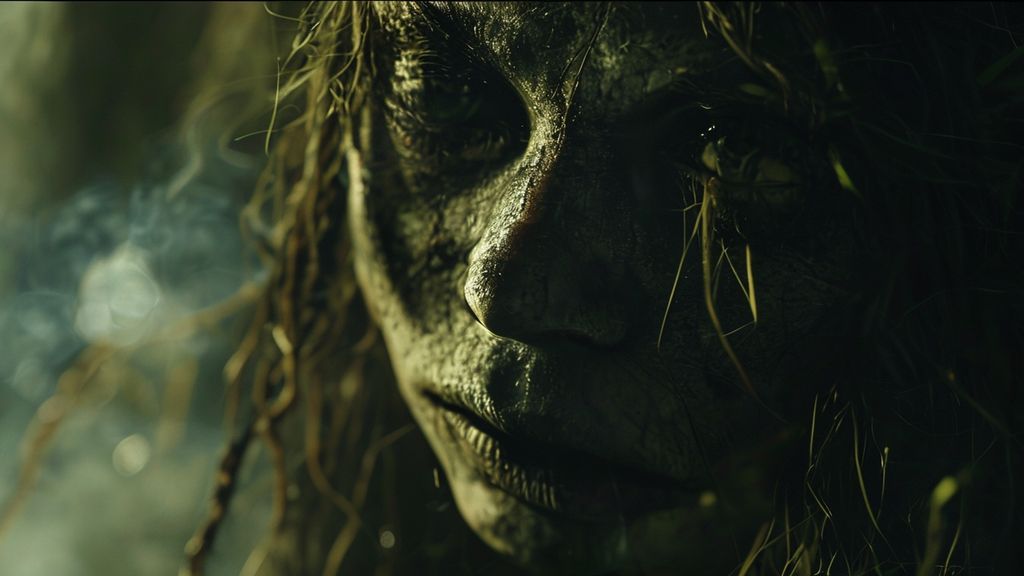
In the green and misty hills of Ireland, there is a sound no one ever wishes to hear: the 'Keening' (caoineadh). It is a sharp, supernatural lament that cuts through the wind and stone walls, chilling the blood of ancient families. The one who emits it is the Banshee (from the Gaelic *bean sí*, 'woman of the fairy mound'). She is not a common ghost, nor a murderer. She is a messenger, a prophetess of aristocratic death, and a direct link to the Celtic 'Otherworld'.
Tradition dictates that the Banshee does not weep for just anyone. Originally, she only appeared to five great pure-blooded Gaelic families: the O'Neill, the O'Brien, the O'Connor, the O'Grady, and the Kavanagh. Over time, the list expanded, but always maintained an air of exclusivity; having a family Banshee was, paradoxically, a symbol of status and ancient lineage.
Her appearance is mutable, reflecting the triple nature of the Celtic goddess. She can appear as a young, beautiful maiden with golden hair, as a majestic matron, or most commonly and terrifyingly: as a decrepit, horrible old woman with rotten teeth, long, dirty nails, and eyes red from endless weeping. She wears grey or white robes, sometimes shrouds, and her hair is usually loose and disheveled, which was a sign of wild mourning or madness in ancient Ireland. She is often seen near streams or rivers, washing the blood-stained clothes of the one who is about to die (in a variant known as the 'Washerwoman of the Ford' or *Bean Nighe*).
The terror of the Banshee does not lie in what she does, but in what she announces. She does not kill. She screams because someone is going to die that night. Her wail is described as a mixture of a woman's lament, an owl's shriek, and the sound of a storm. If the lament is soft and melancholic, it heralds a peaceful death for someone old or ill, a sad but accepted farewell. But if the cry is shrill, furious, and terrifying, it portends a violent, young, or tragic death.
There are chilling accounts from grand manor houses where, in the middle of a dinner or party, all the guests hear the scream outside the windows. The music stops, laughter dies, and the family patriarch pales, knowing his hour has come. Sometimes, the Banshee physically manifests by knocking on windows or flying around the house. She is said to be a protective spirit of the family, an ancestress who mourns the loss of one of her own, but her monstrous appearance and fatal announcement make her a figure of dread.
Anthropologically, the Banshee is the survival of professional mourners ('keeners'), women who were hired at Irish funerals to weep and sing praises for the deceased. The Church attempted to eradicate this custom, deeming it pagan and uncontrolled, and in doing so, demonized the figure of the grieving woman, transforming her into this solitary spirit. The Banshee reminds us that death is a communal and familial event, and that grief has its own sound that resonates beyond the grave.