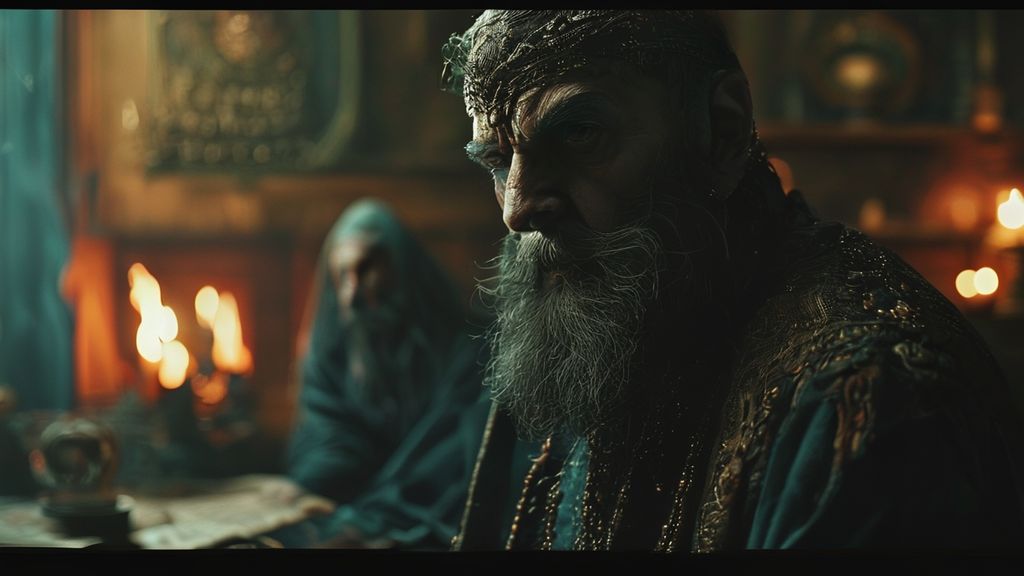
Within Jewish mysticism (Kabbalah) and the folklore of Eastern European Ashkenazi communities, death is not always the end of the journey for the soul. Sometimes, a soul is so burdened with sins or has an unfinished task that it cannot enter Gehenna (purgatory) or ascend to the Garden of Eden, becoming trapped between worlds, wandering as a tormented spirit. This entity is known as a Dybbuk, derived from the Hebrew 'davel', meaning 'to adhere' or 'to cling'.
Unlike Christian demons, which are external malevolent entities, a Dybbuk is the soul of a deceased human. It seeks refuge in the body of a living person, not just anyone, but someone with a 'crack' in their soul, a spiritual weakness caused by a hidden sin, a doubt of faith, or deep melancholy. When it finds its host, it enters (often through the mouth or under a fingernail) and takes control of their voice and actions.
Possession by a Dybbuk is terrifying and theatrical. The victim begins to speak with the voice of the deceased, sometimes in languages they do not know or with knowledge they should not possess. The spirit does not hide; it screams its demands, reveals the community's dirty secrets, or demands justice for a crime committed against it in life.
To expel a Dybbuk, a Hollywood-style exorcism with holy water is not enough. A 'Bet Din' (rabbinical court) is required, consisting of a group of ten Jewish men (minyán) led by a pious rabbi ('Baal Shem'). The ceremony is a cosmic legal trial, where the rabbi interviews the spirit: 'Who are you? Why are you here? What sin did you commit or what injustice did you suffer?' The goal is not only to expel the spirit but to 'heal' it (Tikún), rectifying what binds it to the earth so it can continue its journey towards death.
The legend of the Dybbuk is fascinating because it deals with memory and justice. The spirit is not a random monster; it is a symptom of something wrong in the community or family history. It is the past that refuses to be forgotten and 'adheres' literally to the present, screaming through the mouths of the living to be heard. In a historical context marked by pogroms and displacements, the Dybbuk represented the collective trauma that could not be silenced and was passed down from generation to generation.