For rigorous historians, the case of the Beast of Gévaudan (La Bête du Gévaudan) is the 'holy grail' of historical cryptozoology. We are not talking about a nebulous myth lost in the mists of time, but a series of documented events, certified by the French crown, the church, and military records between 1764 and 1767. For three years, an entire province in southern France, the region of Lozère (ancient Gévaudan), was the hunting ground of a biological entity that defied all zoological classification and challenged the reign of Louis XV.
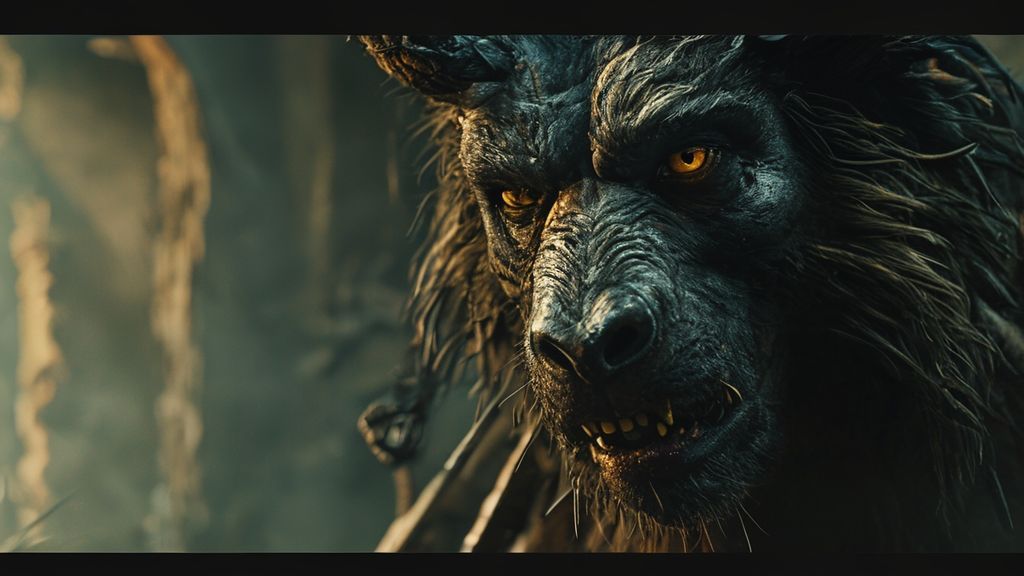
The terror began in the summer of 1764. The first official victim was Jeanne Boulet, a 14-year-old shepherdess. Her body was found partially devoured, with her chest torn open. What at first seemed like a common wolf attack soon revealed itself to be something different. Survivors described a beast that was not a wolf: it was much larger, the size of a calf or a small horse, with a broad chest, reddish coloration with a black stripe down its back, a long, bushy tail that it wagged like a feline, and a short, flat snout with formidable teeth. Most terrifying was its behavior: the Beast was not afraid of fire or gunshots, and showed a sadistic preference for attacking humans, often ignoring the livestock grazing nearby. Furthermore, it had a peculiar attack tactic: it would rear up on its hind legs to strike with its front paws and aimed to decapitate its victims.
Panic seized the region. The Bishop of Mende, Gabriel-Florent de Choiseul-Beaupré, declared in a pastoral letter that the Beast was a 'scourge of God,' a divine punishment sent for the sins of the population, which increased religious hysteria. People stopped going out into the fields. The roads became deserted. News reached Versailles, and King Louis XV, seeing his divine authority questioned by an animal that devoured his subjects, decided to intervene. He first sent Captain Duhamel with dragoons (cavalry soldiers), who carried out massive hunts with thousands of peasants, but the Beast always escaped, as if it possessed human intelligence or a sixth sense.
Frustrated, the King sent his personal arquebusier and royal hunter, François Antoine. In September 1765, Antoine killed a huge, 60-kilogram gray wolf (known as the 'Wolf of Chazes'), had it stuffed, and brought it to court as a trophy. France celebrated, Antoine was rewarded, and the end of the terror was officially declared. But it was a political lie. Months later, in December, the attacks resumed in Gévaudan, more brutal than before. The Beast had returned, or had never left. The government, humiliated, decided to ignore the reports, leaving the peasants to fend for themselves.
The end of the story is worthy of a Gothic novel. On June 19, 1767, during a local hunt organized by the Marquis de Apcher, a local farmer named Jean Chastel came face to face with the Beast. Legend, popularized by later novelists, says that Chastel, a pious and strange man, melted down medals of the Virgin Mary to create blessed silver bullets. While he was reciting litanies, the Beast appeared and stood still, staring at him. Chastel fired, killing the creature with a single shot to the heart. Upon opening the animal's stomach, human remains were found, confirming it was the monster.
What was the Beast really? The body was brought to court, but it rotted along the way and was buried without modern scientific analysis. Historical theories are fascinating: Was it a giant wolf or a wolf-dog hybrid? A striped hyena escaped from a private collection? Or, as darker theories suggest, was it an animal trained to kill? Some historians suspect Jean Chastel himself and his son, Antoine Chastel, a reclusive man who lived in the forest and had experience with exotic animals. Was the Beast an instrument of a serial killer who used an armored animal to cover his crimes? With over 100 official deaths and 30 injured, Gévaudan remains a bloody reminder that, in the Age of Enlightenment, darkness still had teeth.