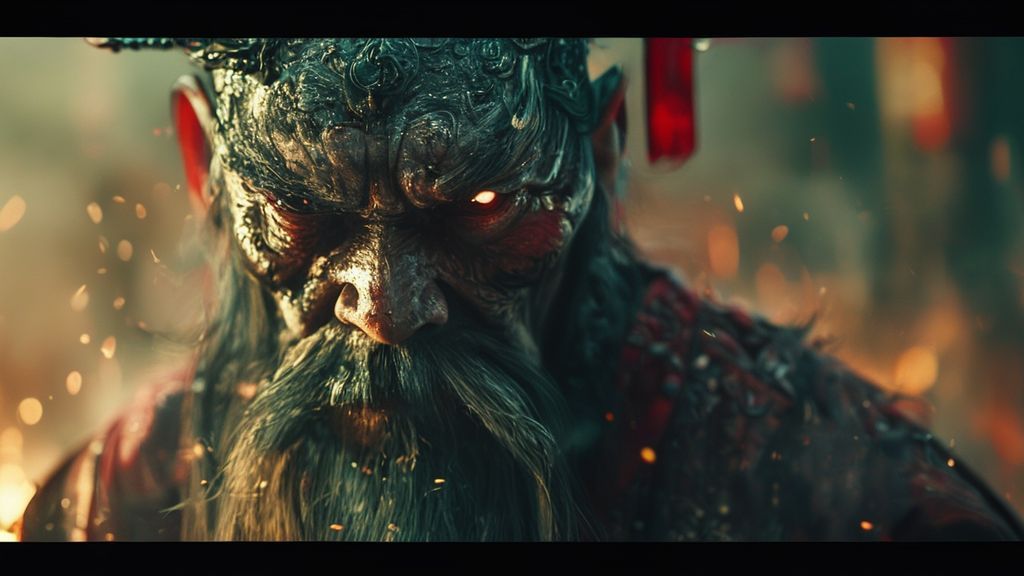
The Jiangshi is China's answer to the vampire and zombie, yet possesses unique characteristics that make it unmistakable. Its name literally translates to 'rigid corpse.' According to Taoist folklore, a Jiangshi is created when a person dies violently, by suicide, or does not receive a proper burial, and their 'po' soul fails to depart the body. Due to rigor mortis, its limbs are stiff, preventing it from walking; instead, it moves by hopping with its arms extended forward, searching for the living to absorb their 'qi' (life force).
Visually, the Jiangshi is iconic, thanks to Hong Kong cinema: it wears the official robes of the Qing Dynasty (blue tunics with embroidery), its skin has a greenish or pale white hue due to tomb fungi, and it has long, sharp nails. It is often depicted as blind, detecting its victims by their breath. This is why, in stories, people hold their breath to become 'invisible' to the monster.
The historical origin of these 'hopping vampires' is both fascinating and pragmatic. It is linked to the ancient practice of 'transporting corpses a thousand miles.' When a person died far from their native village, their family, often too poor to afford normal transport, would hire a Taoist priest to carry the body back home, as it was believed the soul would only rest in its ancestral land. Priests transported the bodies at night, tied to bamboo poles carried over the shoulders of two men. The rhythmic movement of the bamboo made the corpse appear to 'hop' as they walked. From this nocturnal and gloomy sight, the legend was born. To stop a Jiangshi, priests use bagua mirrors, peach wood swords, black dog blood, or, most famously, a yellow paper talisman with spells written in chicken blood, affixed to the monster's forehead.